

Hyperbaric Oxygen Therapy (HBOT)
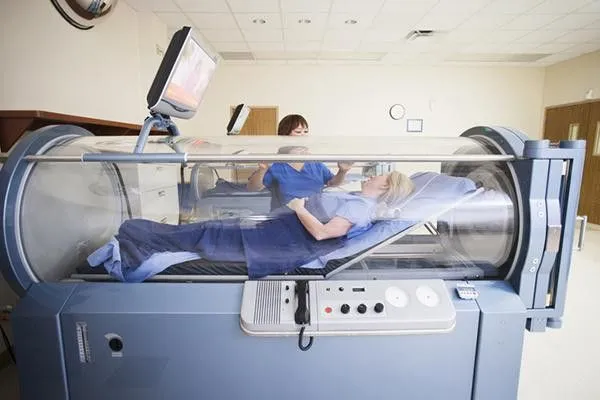
Hyperbaric Oxygen Therapy (HBOT) involves breathing 100% oxygen in a pressurized chamber—typically 1.5 to 3 times normal atmospheric pressure—to enhance the healing process throughout the body.
How It Works
The increased pressure allows your lungs to gather significantly more oxygen than possible under normal conditions. This oxygen-rich blood then delivers enhanced oxygenation to tissues, helping stimulate healing, fight infection, and support tissue repair.
Typical sessions last 90 minutes to 2 hours and may be administered in single-person chambers (monoplace) or rooms accommodating multiple patients (multiplace). Patients may experience pressure in their ears similar to air travel during treatment.
Approved Uses
HBOT is FDA-approved—and supported by the Undersea & Hyperbaric Medical Society (UHMS)—for treating many serious conditions, including:
- Air or gas embolism
- Decompression sickness (the “bends”)
- Carbon monoxide poisoning
- Non-healing wounds, such as diabetic foot ulcers
- Compromised skin grafts or flaps
- Radiation-induced tissue injury
- Refractory osteomyelitis and necrotizing soft tissue infections
- Crush injuries and trauma
- Burns and sudden hearing loss
- Severe anemia, intracranial abscesses
Potential Risks & Safety Considerations
Although generally safe, HBOT does carry some risks:
- Middle-ear barotrauma (ear pressure injuries)
- Claustrophobia—especially in enclosed chambers
- Oxygen toxicity and, in rare cases, lung or neurological effects
- Fire risks from oxygen-rich environments—strict safety protocols are essential
Experimental & Unapproved Uses
HBOT has been explored for a variety of other conditions—such as sports injuries, autism, long-COVID, traumatic brain injury (TBI), Alzheimer's, and cerebral palsy—but most lack strong evidence and are not FDA-approved.